Last November, President Lee Jae-myung announced through the joint fact sheet from the Korea-U.S. summit with President Donald Trump that the U.S. government had expressed its support for Korea’s plan to develop nuclear-powered submarines. This announcement has raised expectations among Korean shipbuilders about advancing nuclear submarine programs.
Nuclear submarines generate powerful propulsion from nuclear fission and operate without external air intake, allowing them to remain submerged for extended covert missions while also reaching designated operational areas quickly at maximum speed. In addition, since nuclear submarines equipped with small reactors have larger hulls than conventional submarines, they can carry a greater array of weapons. However, managing the reactor that provides propulsion and addressing the noise and vibration characteristics unique to nuclear submarines remain significant technical challenges.
For those reasons, the development of nuclear submarines requires advanced engineering capabilities and a robust national infrastructure for construction and operation.
HD Hyundai is at the forefront of next-generation nuclear-powered vessels, collaborating with the U.S. on the development of SMR (Small Modular Reactor)-powered vessels. The company has also secured contracts for performance upgrades of the Republic of Korea Navy’s main submarines and is preparing for overseas submarine exports, demonstrating its advanced technological expertise in the submarine sector.
HD Hyundai Expands Capabilities on Its Domestic Submarine-Building Record
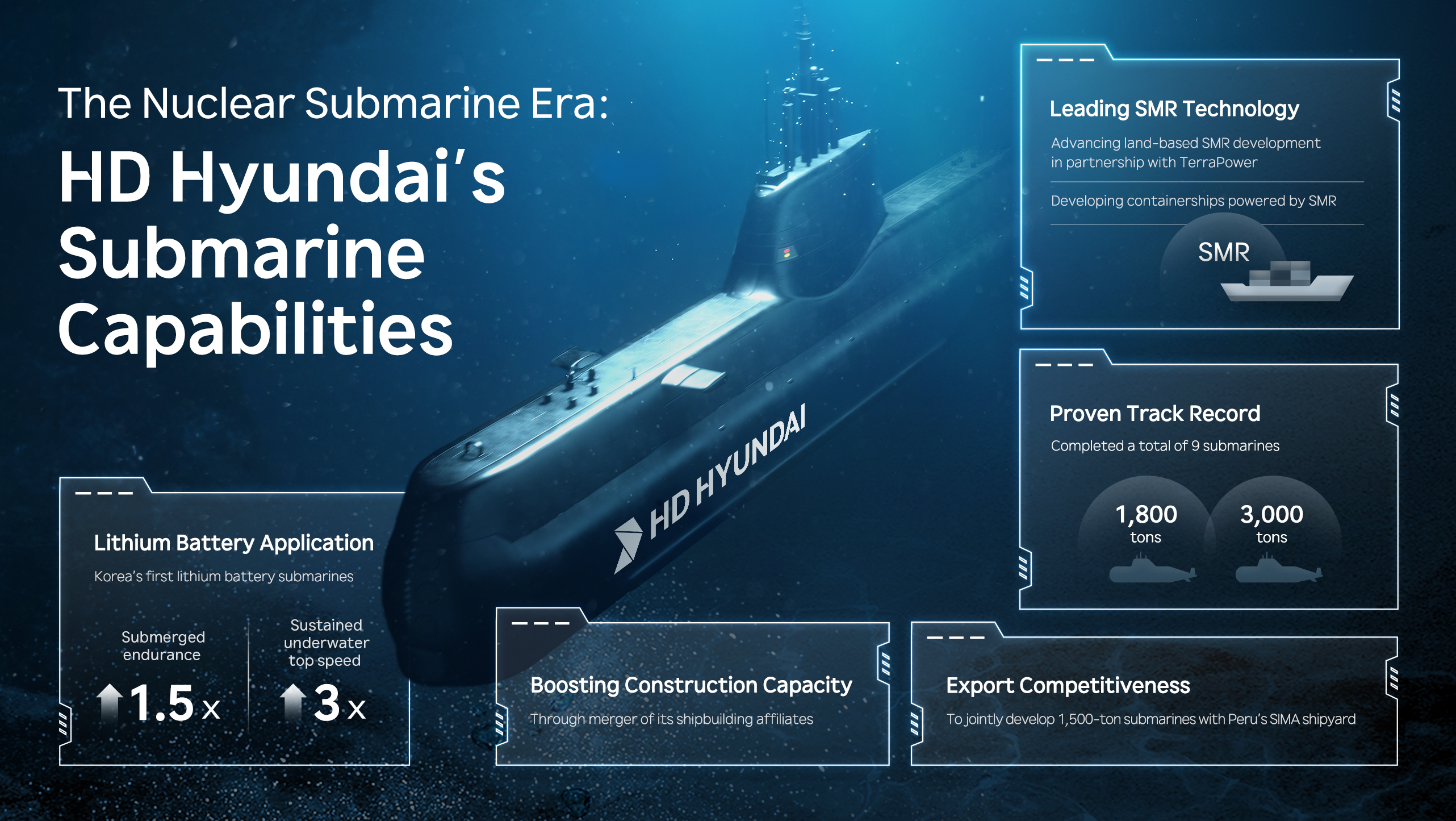
HD Hyundai Heavy Industries (HHI) has built a total of nine submarines to date. Beginning with the Son Won-il in 2007, the company successfully delivered six 1,800-ton submarines. It also constructed the 3,000-ton submarine Shin Chae-ho, which was launched in September 2021 and delivered in April 2024. In addition, HHI has secured contracts for performance upgrades on three 1,800-ton submarines, underscoring its advanced technological capabilities and competitiveness in the submarine sector.
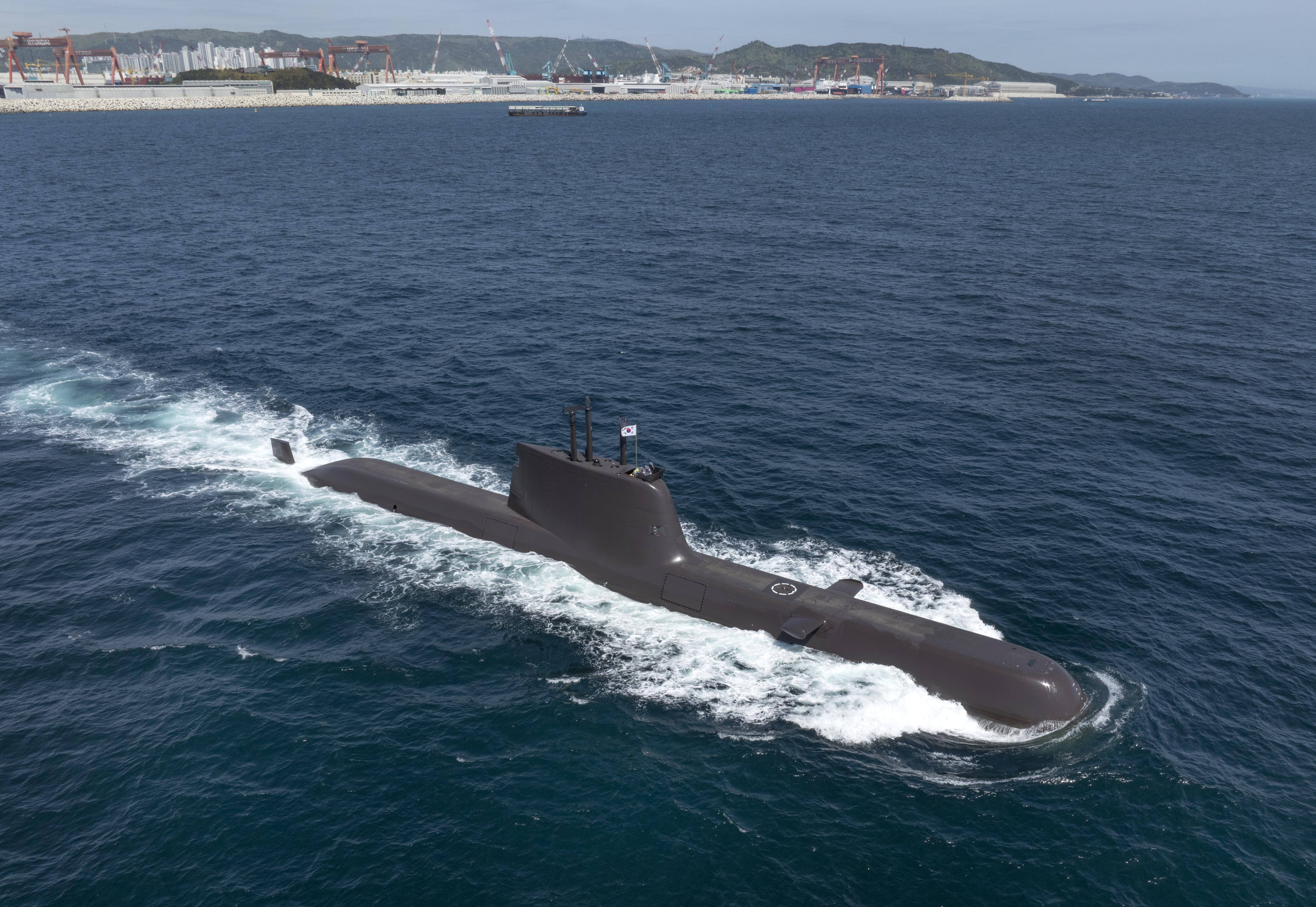
Photo. Sea trials of an 1,800-ton submarine built by HD Hyundai Heavy Industries and delivered to the Republic of Korea Navy in 2016. In June this year, the company also carried out a major overhaul of this diesel-powered submarine.
Jeong Woo-maan, a vice president of HHI, said during the company’s Q3 2025 earnings conference call, “Following the recent merger of HHI and HD Hyundai Mipo, our in-house construction capabilities have expanded. We plan to further enhance our submarine construction capacity, taking into account the Republic of Korea Navy’s combat ships and submarines, as well as Canadian and nuclear-powered submarines, and we are actively moving forward with this plan.”
HD Hyundai Applies Lithium Batteries in Submarines for the First Time
A representative example is the nation’s first development of a submarine power supply system using lithium-ion polymer batteries.
Once a submarine submerges, it is cut off from external air, making engine operation impossible. Therefore, for underwater navigation, it is necessary to use energy storage devices to supply power. Lithium batteries have superior energy storage capacity and can be made lighter compared to the batteries that have traditionally been used in submarines.
Through the application of this lithium battery power supply system, HHI has increased one of the most important performance metrics of submarines—submerged endurance—by more than 1.5 times. Additionally, the sustained underwater top speed has improved by more than three times.
HD Hyundai Prepares for Submarine Exports to Peru
HHI recently signed a letter of intent (LOI) with Shipyard Marine Industrial Services (SIMA) for the joint development and construction of a 1,500-ton submarine for the Peruvian Navy.
Choi Taebok, a vice president at HHI said, “Once we establish a successful track record in submarine development with SIMA, it will strengthen our momentum in the global export market. The Peruvian submarine model is already drawing interest from other countries such as Portugal, and we expect to secure export competitiveness in submarines under 2,000-tons.”
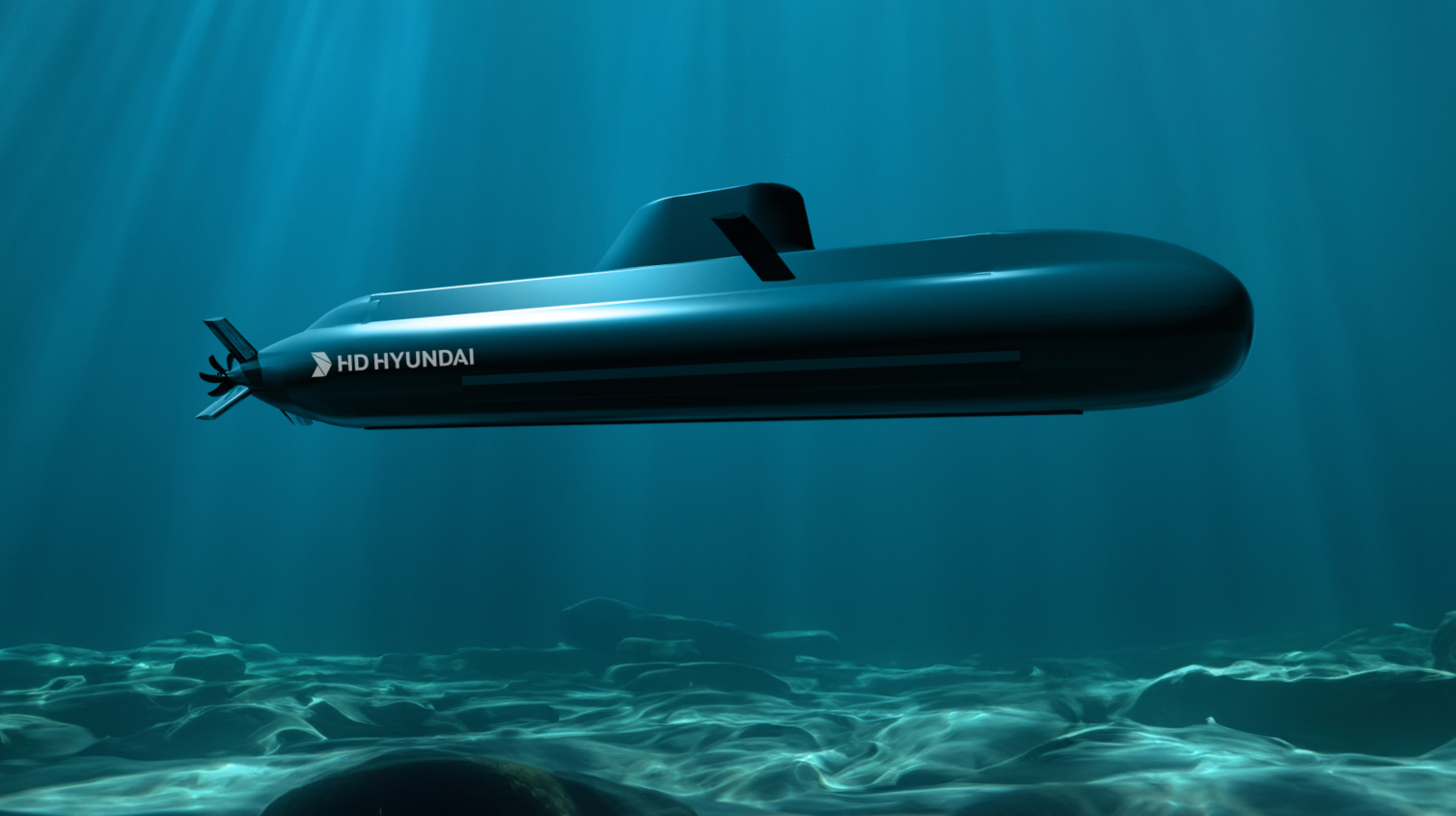
Photo. A rendering of the export submarine model developed by HD Hyundai Heavy Industries
HD Hyundai Accelerates Its Leadership in SMR Technology
HD Hyundai is advancing the development of SMR technology, a type of reactor that serves as the power source for nuclear-powered submarines. SMRs are next-generation nuclear plants with capacities under 500 MW, designed to be smaller and more compact than traditional large-scale reactors while offering enhanced safety.
In December 2024, HD Hyundai secured a project from TerraPower, a leading U.S. SMR company founded by Bill Gates, to manufacture cylindrical reactor vessels. The vessels will be installed in TerraPower’s 4th-generation Sodium Fast Reactor (SFR), which is planned for deployment in Kemmerer, Wyoming. As a type of SMR, the SFR is noted for its enhanced safety, high technological maturity, and significantly reduced nuclear waste—approximately one-twentieth that of conventional reactors—making it one of the most promising next-generation SMR technologies.
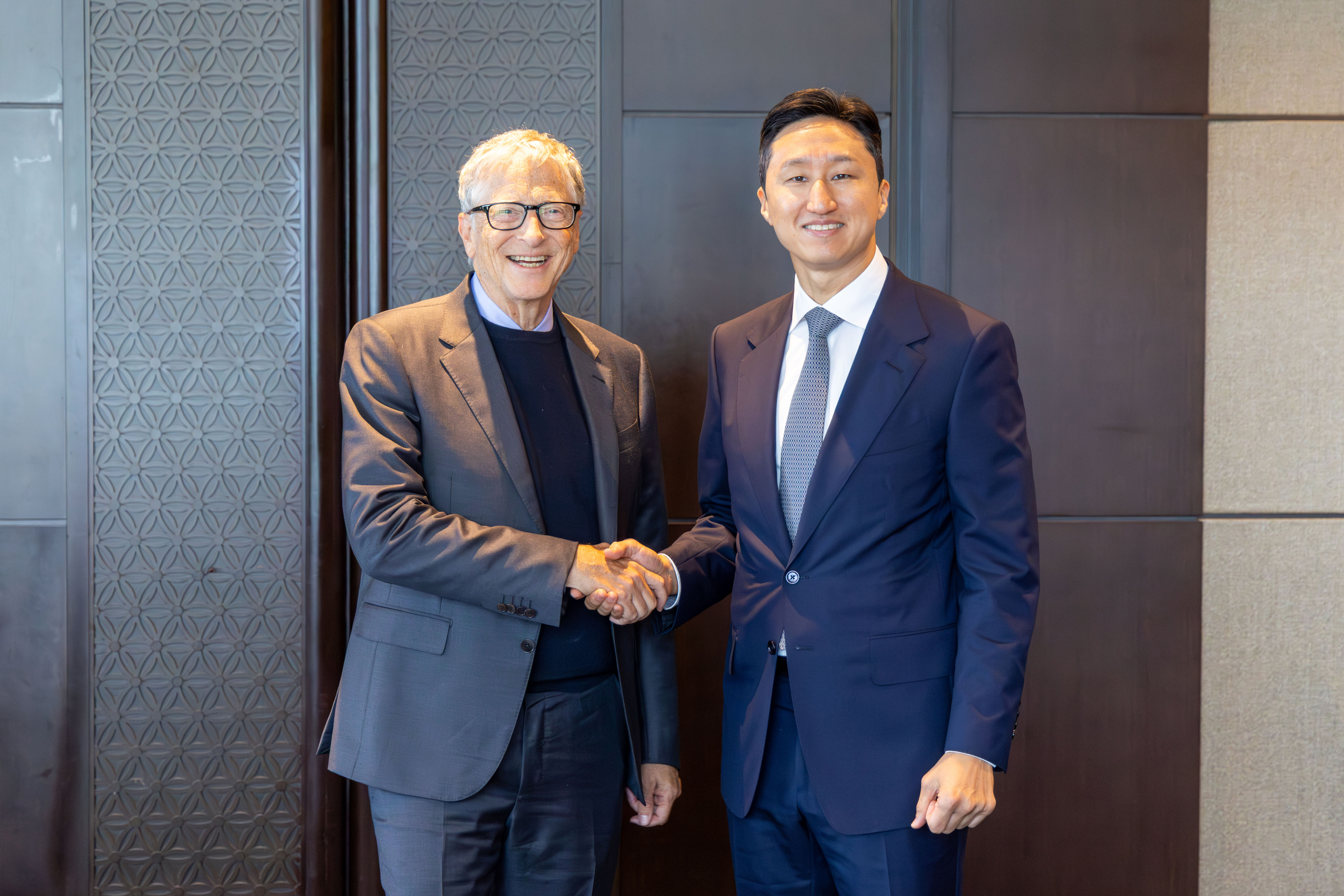
Photo. On Friday, August 22, HD Hyundai Chairman Chung Kisun met with TerraPower Chairman and Founder Bill Gates to discuss nuclear supply chain cooperation.
Building on its extensive manufacturing experience and advanced technological capabilities, HD Hyundai is expected to lay the groundwork for the commercial deployment of the Natrium reactor.
This March, HD Hyundai signed an agreement with TerraPower to study and develop optimized manufacturing methods for the key equipment to be installed in the Natrium reactor. Through this collaboration, the company plans to expand its manufacturing base to support the full-scale commercialization of the Natrium reactor.
HD Hyundai is developing a new type of nuclear-powered vessel, a ship that has never been built in Korea. Since SMR-powered vessels and nuclear submarines share fundamentally similar technologies, the expertise gained from this development is expected to be actively leveraged in nuclear submarine construction.
In February of this year, HD Hyundai unveiled its first concept model of a container ship design model applying SMR technology at an event held in Houston, U.S. The company is currently developing a 15,000 TEU-class container vessel powered by an MSR (Molten Salt Reactor) engine system. MSR uses molten salt as both coolant and fuel carrier at high temperatures. Development of this SMR-powered vessel is currently around 50 percent complete, with full-scale completion targeted for 2030.
Earlier, HD Hyundai received Approval in Principle (AIP) from the American Bureau of Shipping (ABS) for a 15,000 TEU-class container ship design model applying SMR technology.
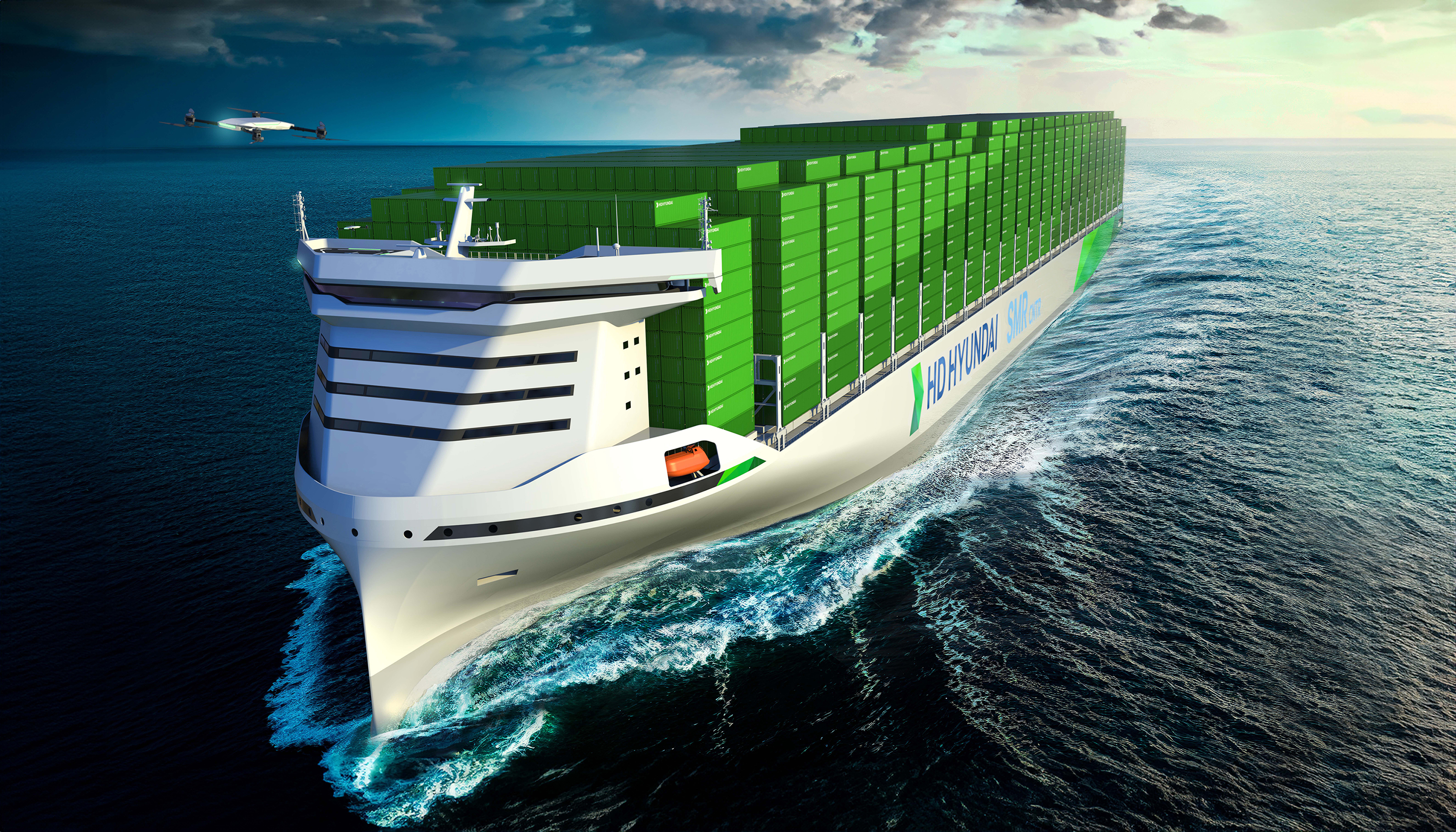
Photo. Rendering of a 15,000 TEU-class container ship powered by SMR, unveiled by HD Korea Shipbuilding & Offshore Engineering
In November 2022, HD Hyundai invested USD 30 million in TerraPower. This investment reflects the group’s efforts to leverage its capabilities in the nuclear sector to explore new business opportunities and, in the long term, to secure a leading position in offshore nuclear power and nuclear-powered vessels.
Nuclear submarines are recognized as a game changer in determining global naval capabilities. HD Hyundai is taking the lead in preparing for the nuclear submarine era by collaborating with global partners and advancing its technological expertise.